Even if I could eat loads of sushi, especially in Japan, I need to get my portion of meat whenever I travel to Japan, as there is nothing that tastes quite like wagyu.
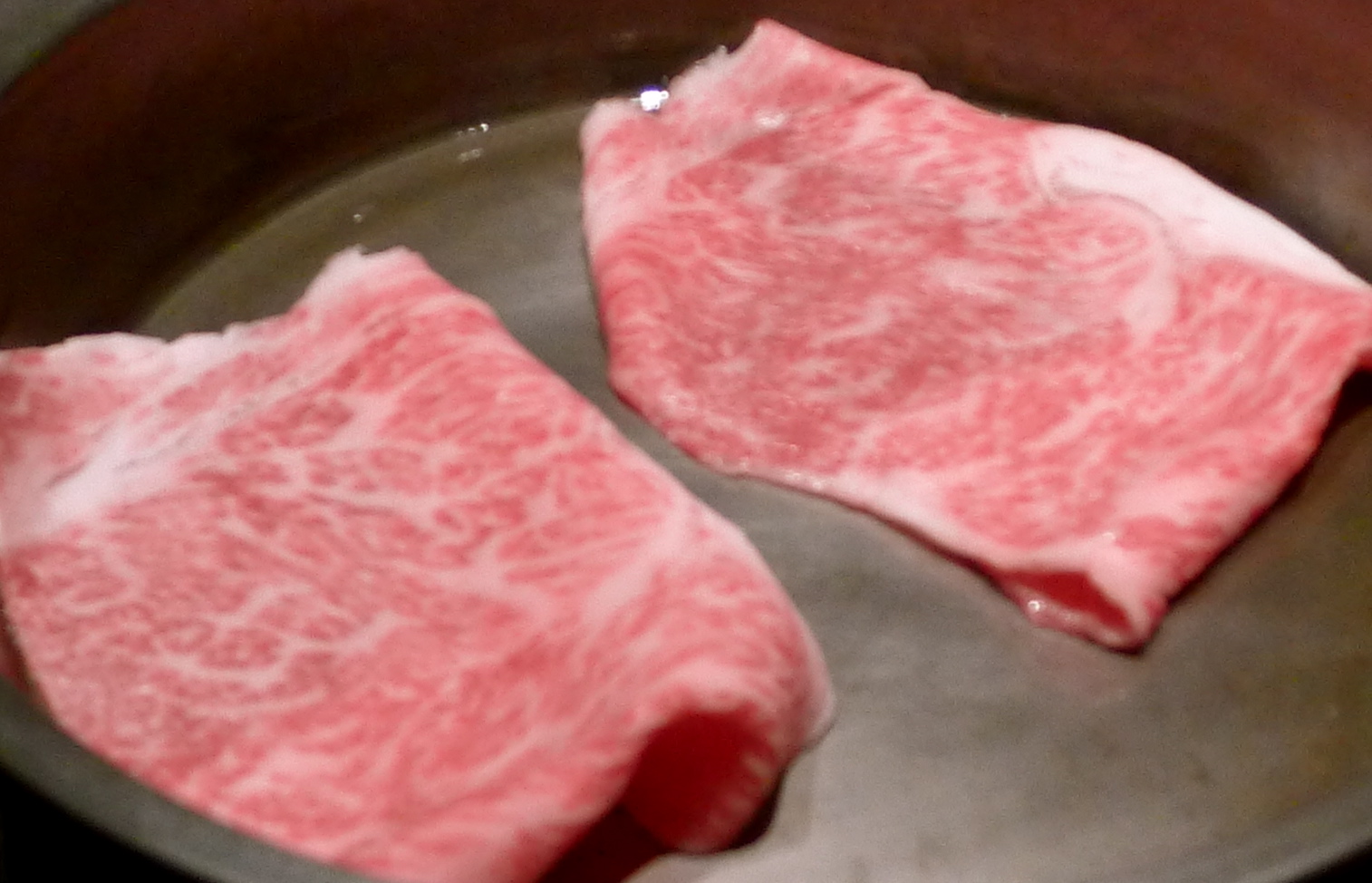
Matsusaka beef
And just to let you know, I do eat a bit of everything (except whale…), but I also strongly try to follow my principle of buying only sustainable production, food that is not GM nor includes growth-promoting hormones. I also try to avoid mass production meat, poultry, fish, vegetables, fruits etc. Unfortunately however it is easier said than done, especially when traveling, but I sincerely try to follow these principles.
By the way, did you know that wagyu literally means Japanese cattle (“wa” is traditional word referring to Japan and “gyu” means cattle)? Wagyu breed has five major breeds in it, out of which Japanese Black (Tajima) is the most popular and accounts for more than 80% of commercially produced wagyu. Most of wagyu cattle consumed nowadays are bred and raised in Australia, New Zealand and US.
Kobe, Matsusaka and Omi or Yonezawa beef are considered the three top brands of beef in japan and are called Sandai Wagyuu (“the three big beefs”). Matsusaka is a black-haired wagyu breed and comes from Matsusaka region of Mie prefecture, where only female wagyu is qualified to be Matsusaka beef.
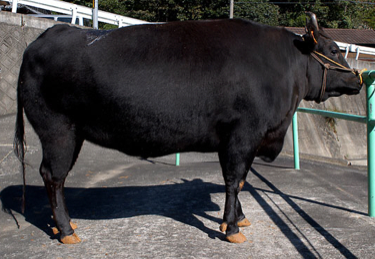
Tajima cattle
Kobe is bred from the Tajima strain of wagyu cattle and comes from Hyogo Prefecture. Omi beef is also a black-haired breed, a result of crossbreeding Japanese and non-japanese cattle. Omi is raised in Shiga Prefecture. Some people consider Yonezawa beef from Yamagata prefecture as one of the three top brands, instead of Omi, but as I prefer writing mostly only of things I have experienced myself, I consider the top three as Kobe, Matsusaka and Omi. About Omi experience I will make a separate post.
The crowing method for Japanese marbled wagyu beef varies between the breeders and none is willing to tell exactly all their secrets about growing the cattle, but some feed the cattle with tofu, some massage them, some give them beer and some believe a quiet surroundings is the key to good marbling. Many growers have a combination of factors that generate the perfect marbling.
Only after we run into a local butcher store selling these top beef brands – and seeing the prices of them – we understood the prices of the teppanyaki and sukiyaki dinners we had… The top of the top costs about 400€ per kg.
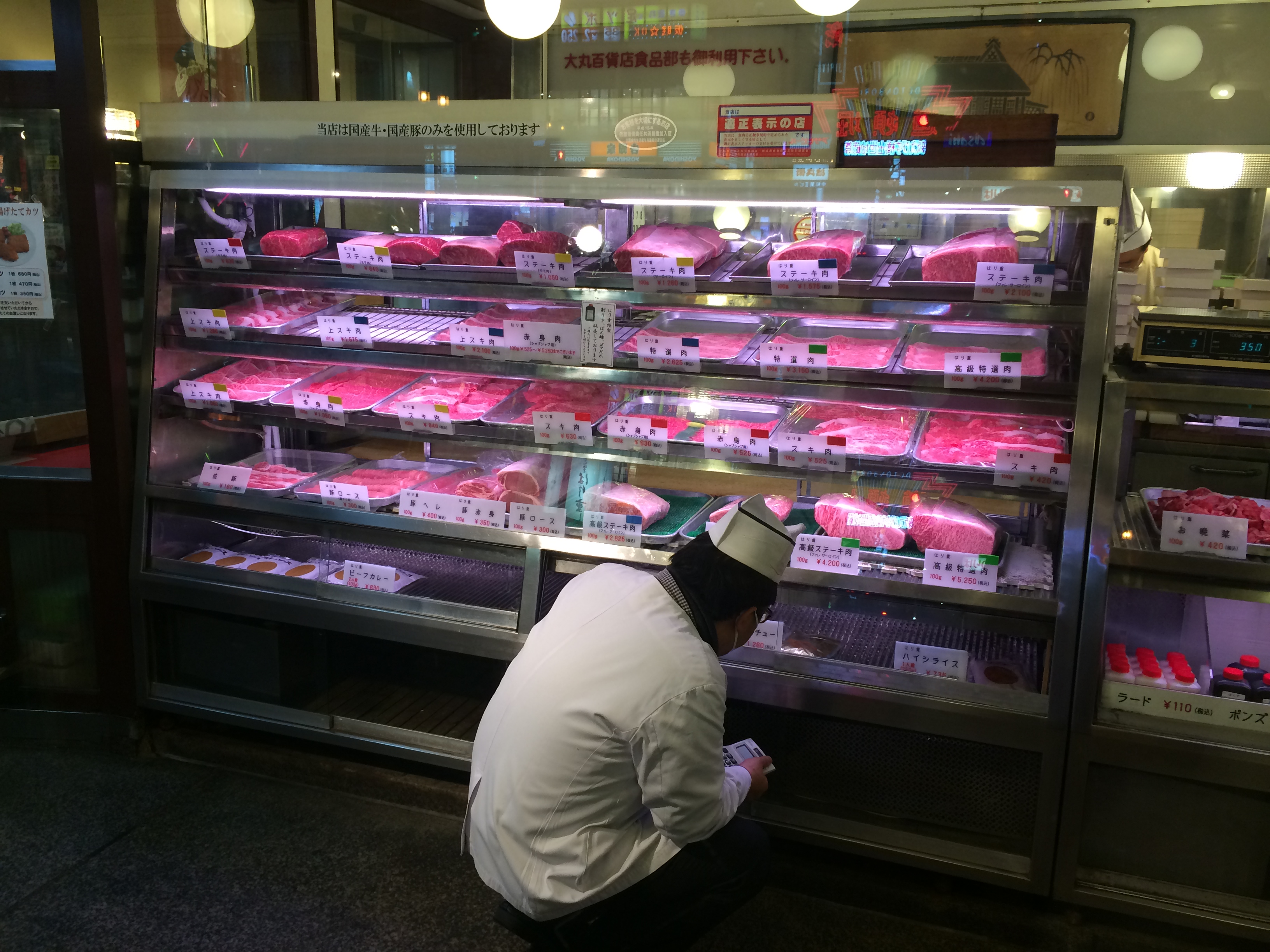
Local butcher
Any of these beef types is best in my opinion prepared on a grill (Teppanyaki) or in Sukiyaki or Shabu Shabu, or then just as plain sashimi. Prior to 2012, Kobe beef was not exported and since then, it has been only exported to a few countries. There is a lot of “Kobe-style” beef, which can also be good beef, but does not fulfill all the conditions set to the registered Kobe beef by the Kobe Beef Marketing and Distribution Promotion Association. While ordering Kobe (or any other of the top breeds), please remember that the restaurant has to be able to show you an official stamped certificate that the beef is real Kobe.
Ken teppanyaki @ Shinsaibashi
We had a nice Teppanyaki dinner in Osaka, in a small restaurant called Ken. The place was a bit hard to find for a non Japanese-speaker, but with the help of our hotel butler and a few locals found on the street, we managed to find it – the restaurant is located near Dotombori on a quiet side street and on the second floor of a more like garage looking building, called Nippo-Fine Plaza. The restaurant is on the second floor, in front of the lifts and can be recognized by a typical wooden door. Once you find the place and get in, you feel like coming into a Japanese home.
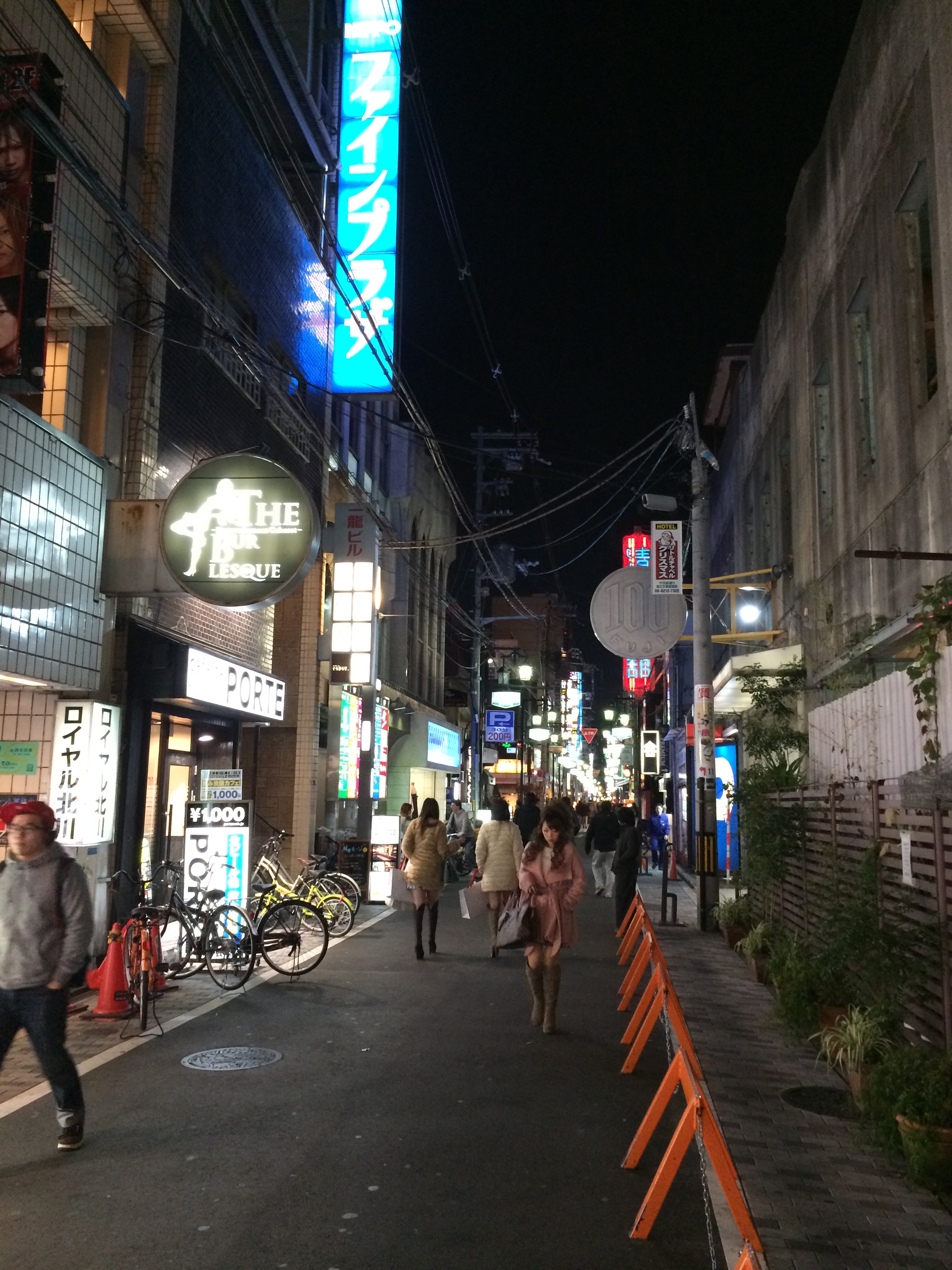
Nippo-Fine Plaza (blue sign)

Nippo-Fine Plaza floor plan
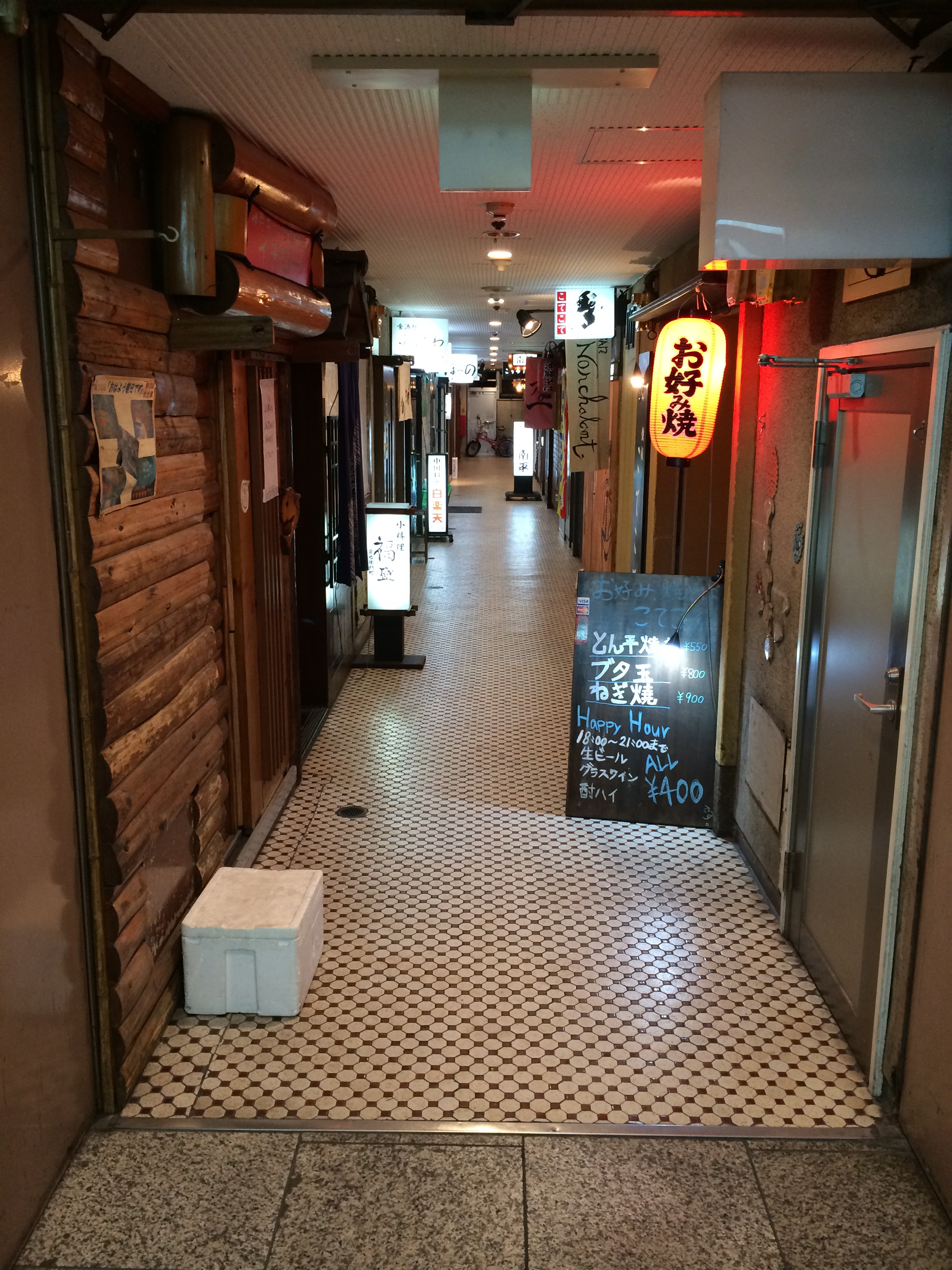
Nippo-Fine 2nd floor
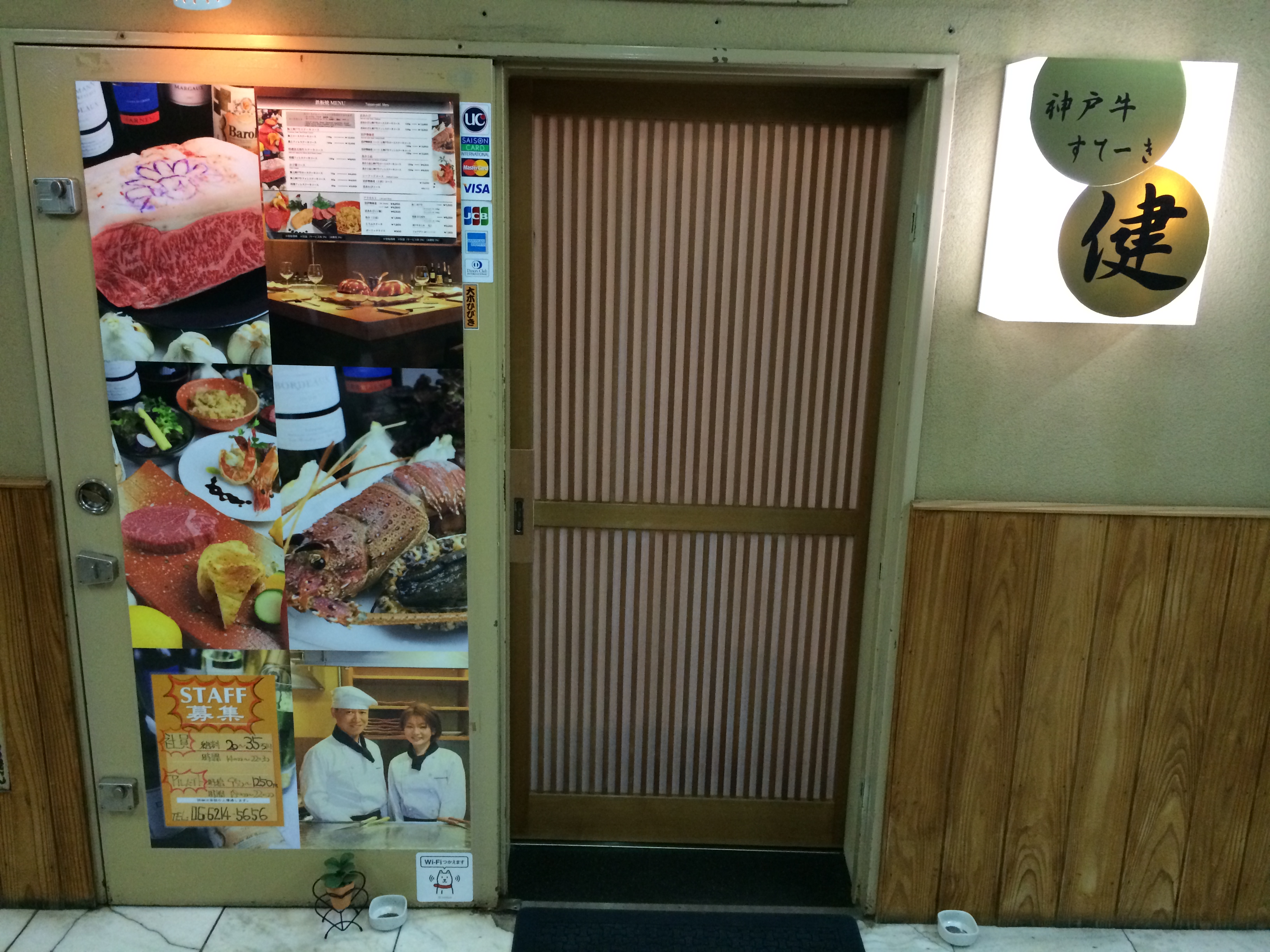
Ken teppanyaki entrance
This restaurant serves only set menus with a price of approximately 130€ and kindly note that reservations are binding. They only have place for about 16 persons and as the Kobe meat is always served extremely fresh (and is very expensive) these family run restaurants need to know for how many persons they should prepare the meat each evening. Understandable and I do appreciate their wish to serve everything very fresh.
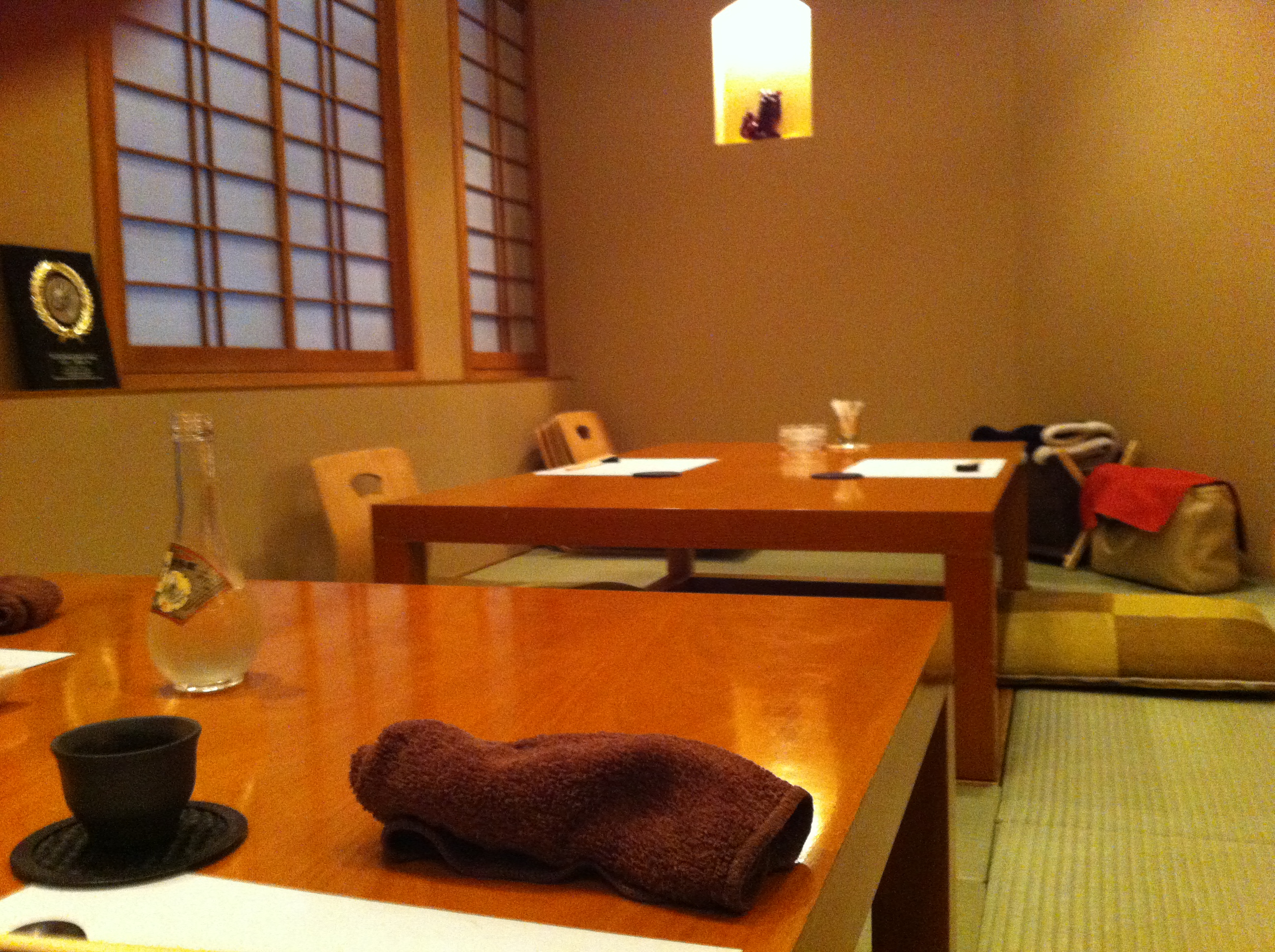
Ken teppanyaki
In the beginning of the menu, you get different typical Japanese appetizers, which were very tasty. There is a stamped sign on the wall with the certificate of the origin of the meat served in the restaurant. After the appetizers and first course, before preparing the beef, the chef brings the meat to the table for you to approve it and brings also the certificate once again. Naturally we were not able to read it unfortunately. The marbling in the beef was fantastic, but as we did not really have a common language, I do not know which stage of marbling it was (the scale in Japanese wagyu marbling goes from 1 to 12).
There was only one thing in the menu that I was not so impressed about: garlic bread. There was nothing wrong with it, but while in a nice local Japanese restaurant, I do not wish to eat garlic bread. Well, then again, I do understand that most clients are local and for them it might be an exciting addition to the menu.
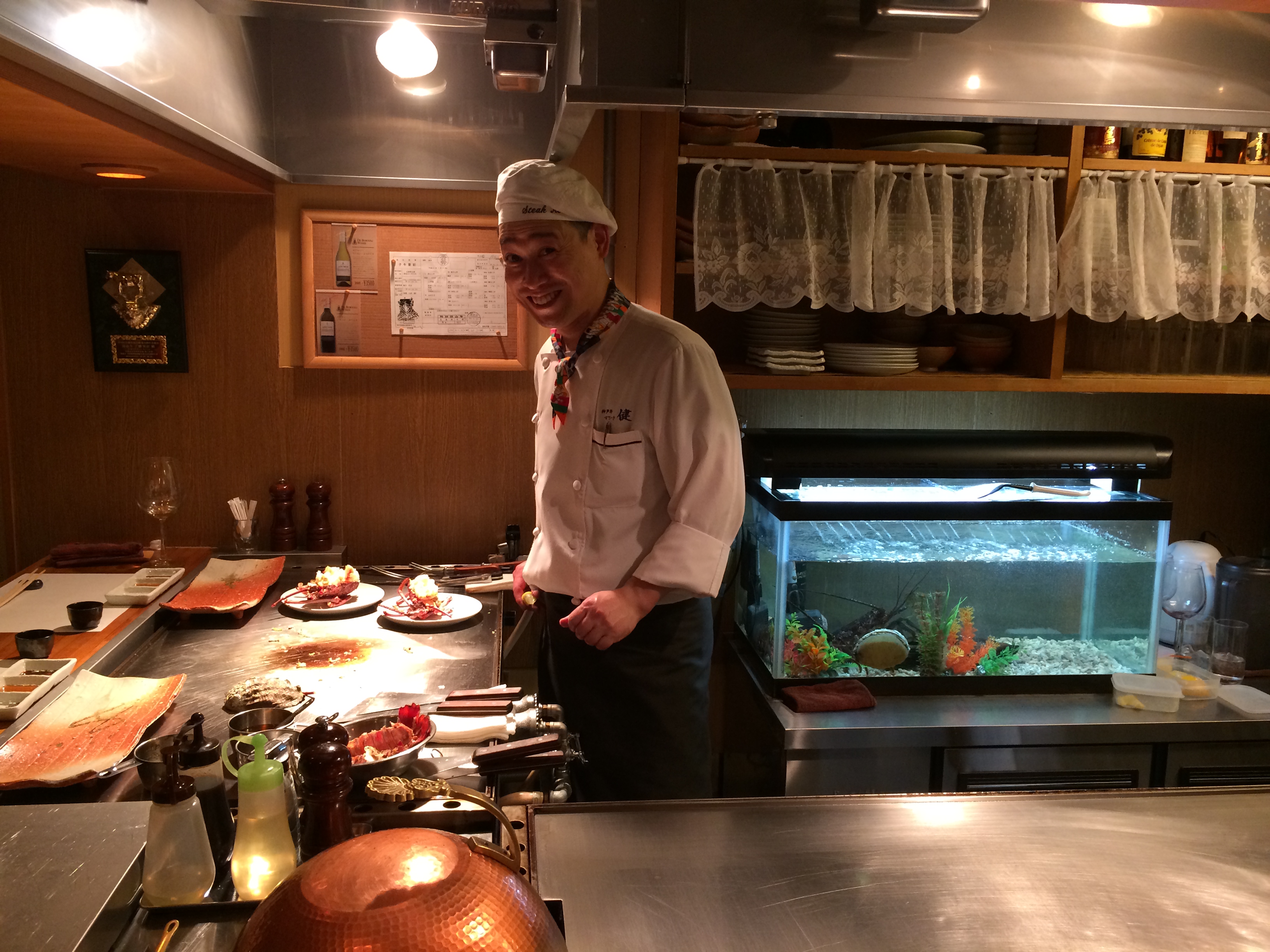
Ken chef

Ken teppanyaki grill
Ken, Nippo-Fine Plaza 2F 2-3-5, Shinsaibashisuji, Chuo-ku, Osaka
After Asahi beers as aperitifs, we ordered sake. As I prefer semi-sweet sake, we asked the waitress to recommend us some. She brought us a bottle of Kamotsuru Tokusei Kinpaku, which was by far the best sake I have ever had. Kinpaku in the name means that it has gold flake in it, which is added to represent good times and celebration. Kinpaku sake is usually Ginjo or Dai Ginjo sake, which are the two top categories of sake.
The sake we had is Dai Ginjo sake, brewed with highly polished rice and very precise methods. There are six categories of top sakes known as “tokutei meisoshu” (Junmai Dai Ginjo-shu, Dai Ginjo-shu, Junmai Ginjo-shu, Ginjo-shu, Junmai-shu and Honjozo-shu). These sakes represent only about 20% of the sakes produced. The four first ones represent only 6% of the production and are generally called ginjo-shu sakes, considered super-premium sakes.
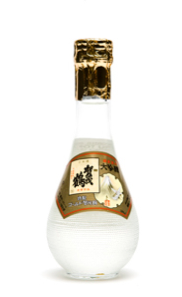
Gold flake sake
Sukiyaki @ Takashimaya
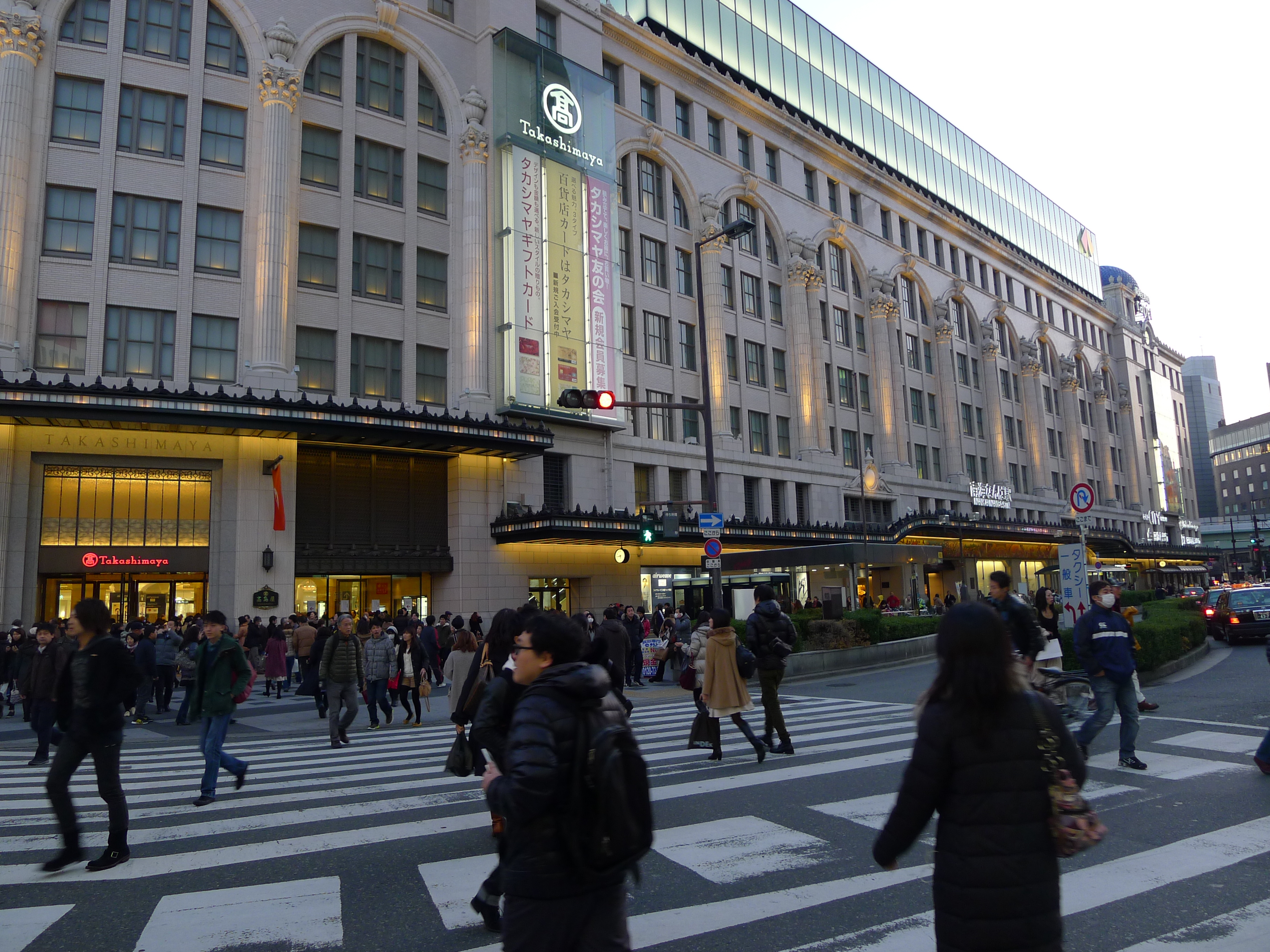
Takashimaya Nanba
After the teppanyaki experience, we still wanted to have some Sukiyaki or Shabu Shabu. We had been earlier in Nanba to Takashimaya department store’s food court (8th and 9th floor) for sushi and found it very convenient. I took a little stroll on the Internet and found out that there is a restaurant called Fukujukan, selling Matsusaka beef cooked either in Sukiyaki or Shabu Shabu.
So we decided to try it, but had no idea that they would really not speak any English nor would have the menu in English. We anyhow decided to go for it and were told at the entrance that there is “only Japanese food, no international, okay?”. Well that would be more than ok for us as this was what we were looking for.

Takashimaya food court
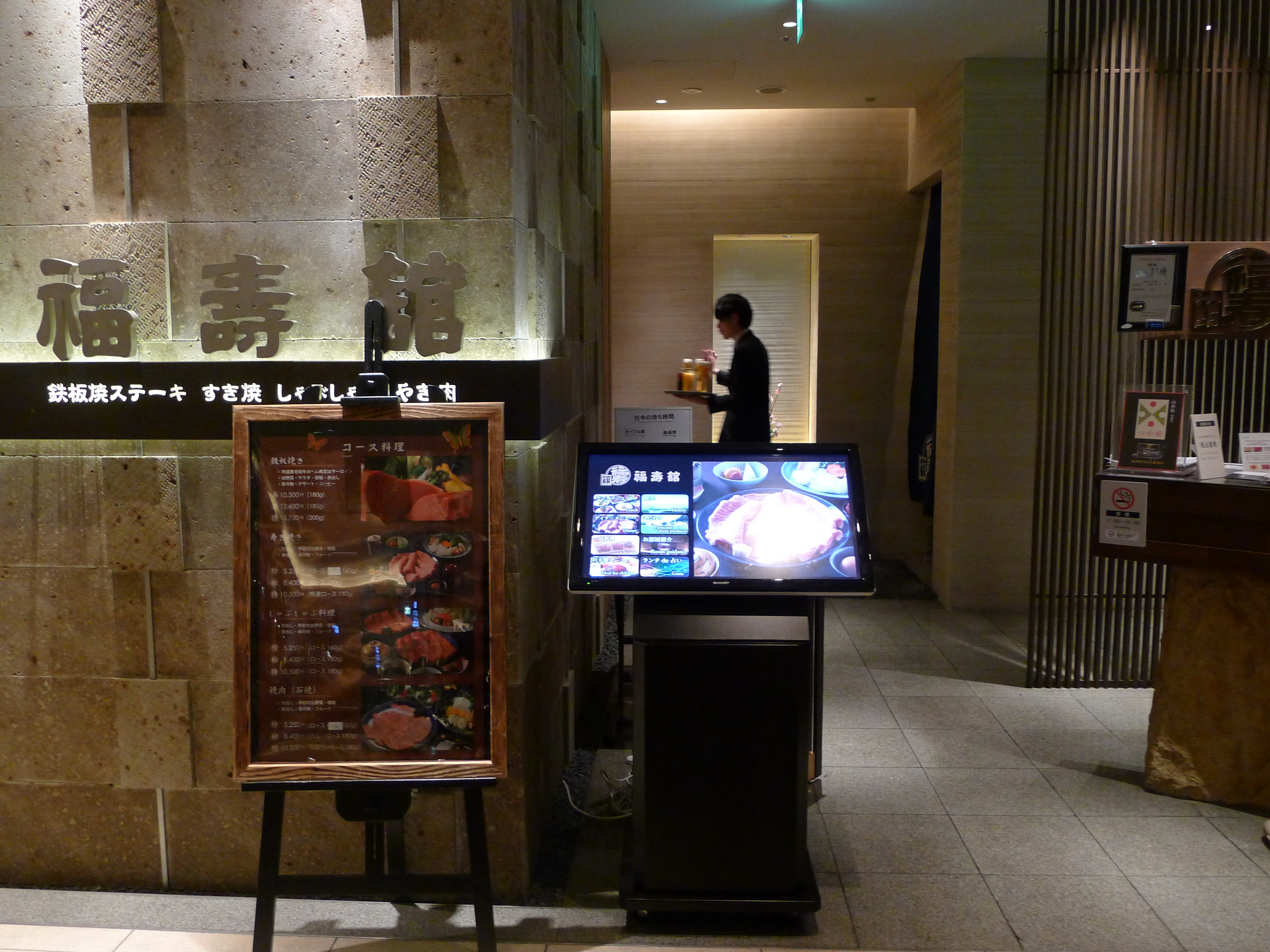
Fukujukan entrance
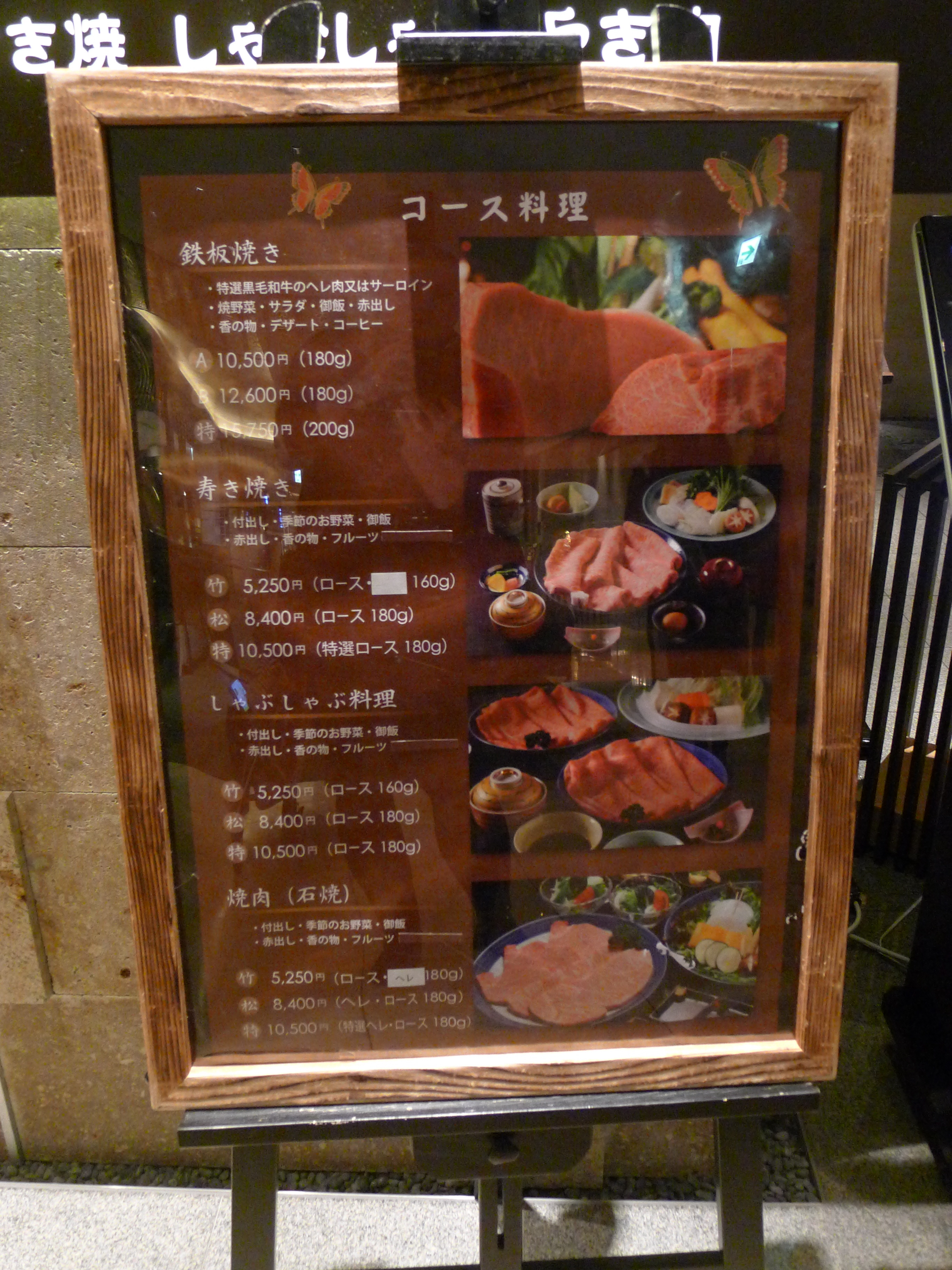
Fukujukan menu
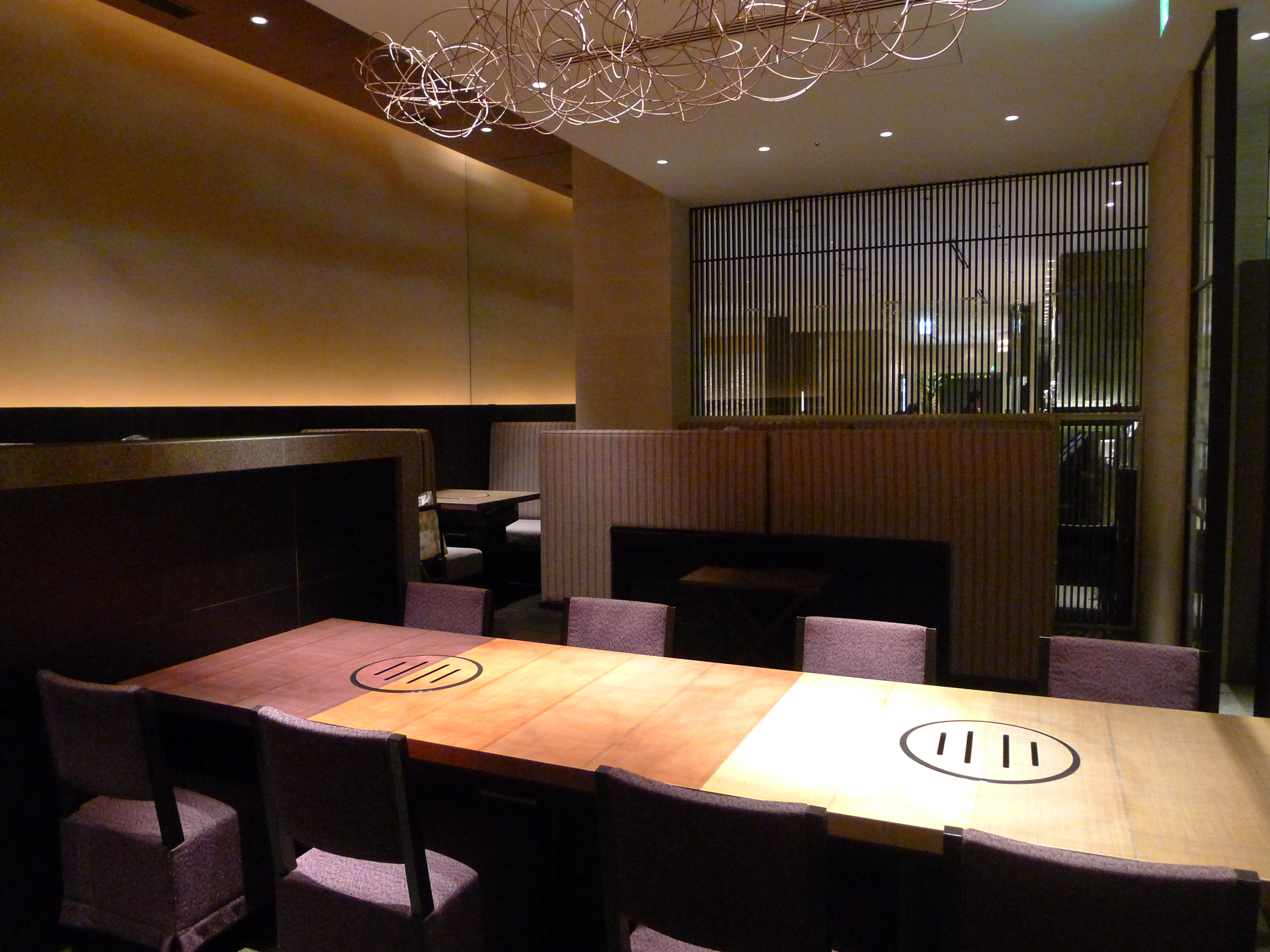
Fukujukan interior
I decided that we will have Sukiyaki instead Shabu Shabu. The difference is mainly in the cooking method and actually all the cooking is done by you in the table. The difference mainly is that in Shabu Shabu you cook the meat in a kind of a fondue with a beef stock and in Sukiyaki, the beef is cooked on a cooking stone heated by gas only with some beef fat and then a typical sukiyaki sauce is added into it while cooking.
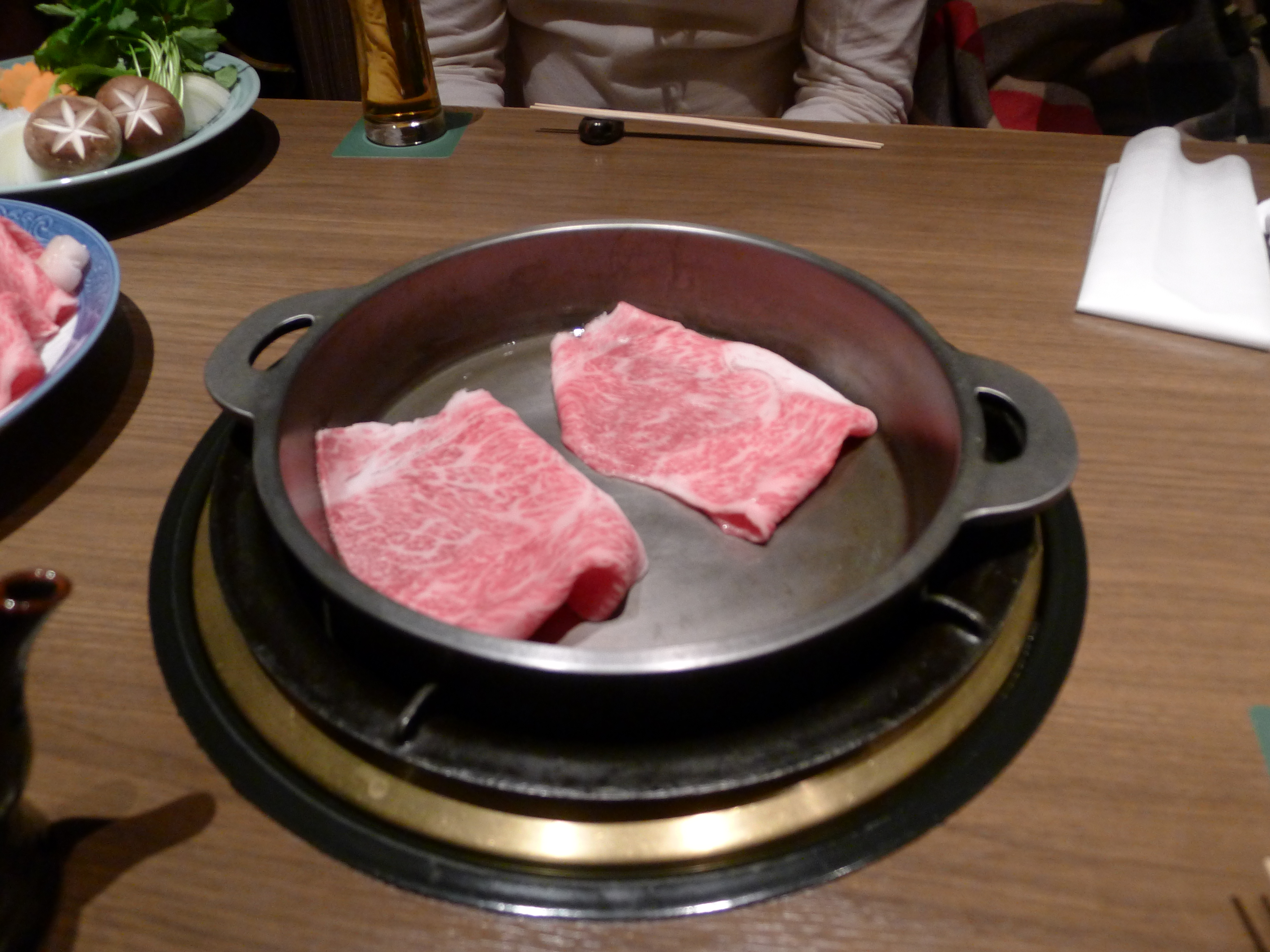
Can’t wait for the first bite of Matsusaka…
As the menu was in Japanese, we had no choice but choosing the meat in random. We were naturally able to communicate that Sukiyaki was what we wanted to have, but there were many levels of beef Sukiyaki. Without knowing any better, we decide to go for the most expensive as it was our last night in Japan. And that choice did not go wrong…

Matsusaka sukiyaki being cooked
Our non-English speaking waitress was absolutely adorable young girl, who made us the first portion of Sukiyaki – explaining it all in Japanese – and then let us do the next ones on our own. Luckily we had an idea from previous Sukiyaki experiences in Europe of what to do with the sukiyaki pan…
All the ingredients are brought to table fresh. And by fresh I mean that they look like the vegetables would have just been picked up that morning. There are along with the beef some udon noodles, kale, enoki mushrooms and much more.
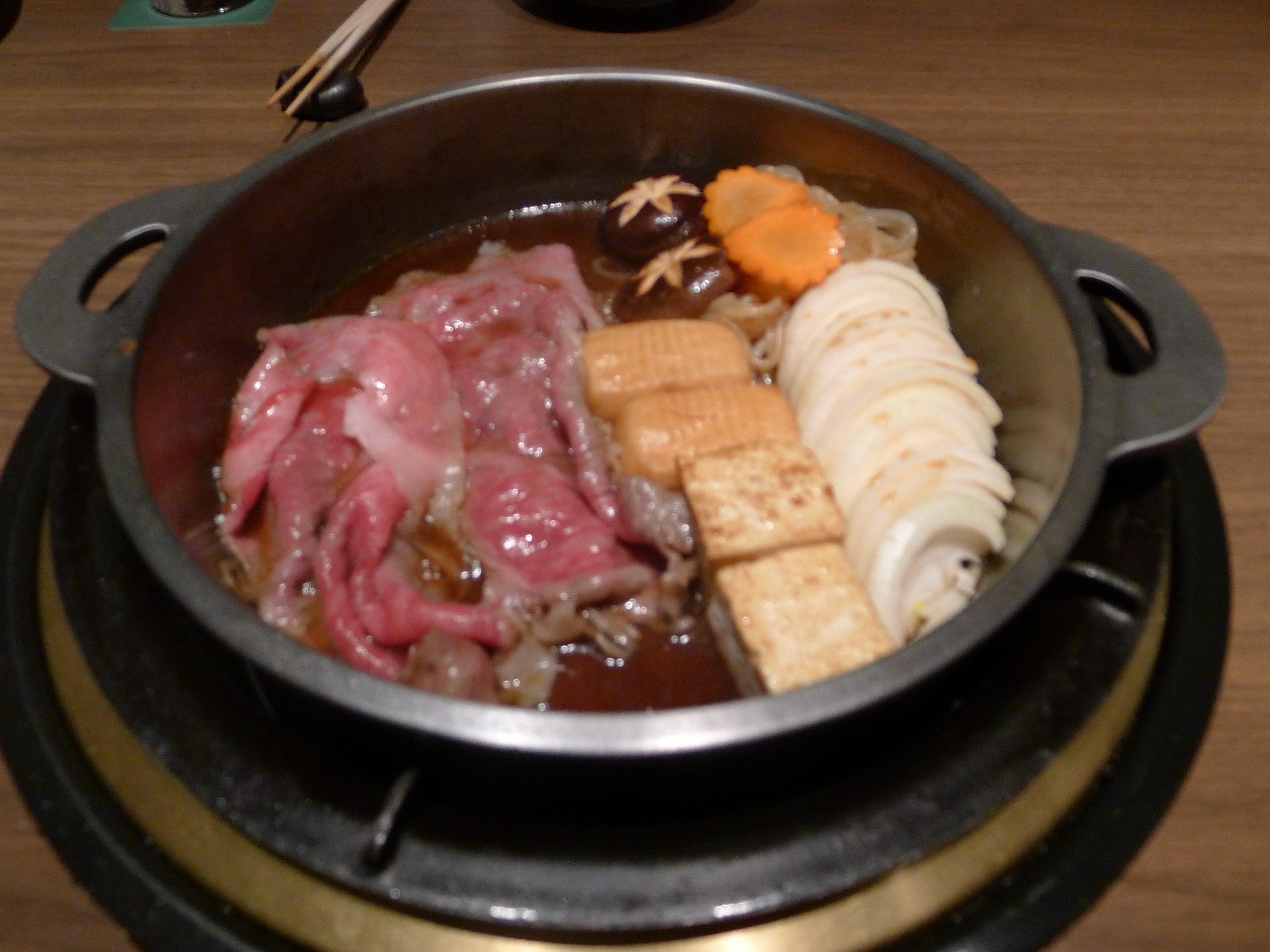
Sukiyaki pan in action
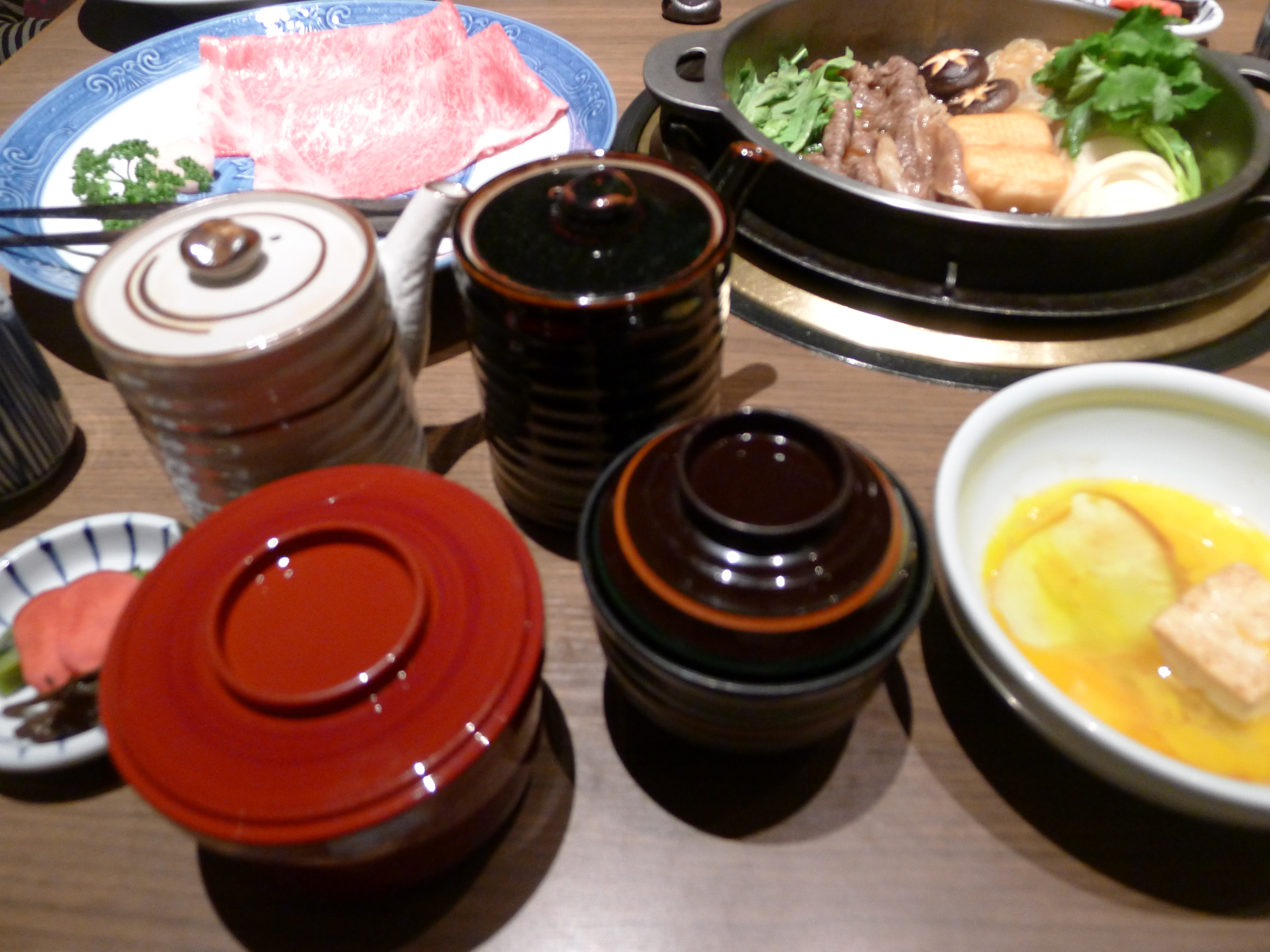
The full menu
And if you are accustomed to eat with chopsticks, cooking with them is yet another story… Due to a linguistic barrier, we were not able to choose the kind of sake we would have wished for. We were brought warm, sour sake, but I have to admit it was good with the beef.
Fukujukan, Takashiyama dining maison 9F, 5-1-18, Nanba, Chuo-ku, Osaka
This was for sure a good way to finish our culinary experiments in Osaka – a city known for its food.


 missingmiles
Leave a comment